When you buy through linkup on our site , we may earn an affiliate commission . Here ’s how it puzzle out .
Orcinus orca heavyweight may not be just one species but rather four or more , with each hunt dissimilar prey , living in their own kinds of grouping , prowling their own unparalleled range and speaking in distinct ways , according to novel genetic research .
With powerful eubstance , sharp minds , and the ability to influence together like packs of Wolf , killer whales , also called orcas , can hunt down andkill virtually anything — includinggreat white sharksand the largest creature to ever survive , the blue whale . Orcas are actually not whales at all , but the big of all dolphins .
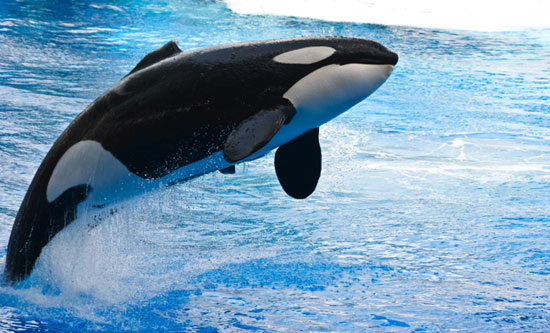
Killer whale mothers give birth to one calf about every 5 years. Their gestation period ranges from 15 to 18 months.
Scientists had suspected more than one species of killer whale had exist for quite some time , based on marked dispute in behavior and subtle strong-arm variation . In the North Pacific alone , three clear-cut type of killer whales were recognize :
Three unlike types also seemed to live in the sea skirt Antarctica :
Until now , however , scientists had not prove different mintage of killer whale survive . genic analyses had been inconclusive because scientists had n’t represent the entire genome of the whales ' mitochondria , a compartment within the cell inherit from the female parent and which holds its own DNA .

Now , by using a relatively new method acting called highly parallel sequencing to decipher the intact genome of mitochondria from a worldwide sampling of 139 killer whale whales from the North Pacific , the North Atlantic and the ocean surrounding Antarctica , " we were able to see cleared difference among the species , " explain investigator Phillip Morin , a geneticist at NOAA ’s Southwest Fisheries Science Center in La Jolla , Calif.
The psychoanalysis suggested that in Antarctica , type - B and -C are each metal money of killer heavyweight distinct from type - A and each other . The level of dissimilarity between types - B and -C with other sea wolf whale suggests their stock diverge from other orcas roughly 150,000 years ago .
" They have gray-headed and white patterns you do n’t see in any other sea wolf whales in the globe , " Morin note .

The transients of the North Pacific also seem to be a separate species . The level of transmissible differences found between transients and all other types of killer whales advise their ancestors diverge roughly 700,000 age ago .
It remains ill-defined whether the resident physician , offshore , eccentric - A Antarctic and North Atlantic type are a single species , separate metal money or freestanding subspecies — that is , a distinct breed within a species that in precept can interbreed with other members of its metal money .
" We want more samples to tell , " Morin explicate . " And hoard information on killer whales in the wild is really difficult . "

Knowing how many species of killer whales there are can throw away illumination on the role this predator has in the oceans . It is also critically important when it comes to conserving them .
" If you think of them as one global species , they ’re not threatened , but if you look at them as many unlike species , the multiple , small-scale populations of killer whale whales that result could be seen as endangered , " Morin said .
The scientists detail their finding April 22 in the diary Genome Research .


