When you purchase through data link on our situation , we may clear an affiliate commission . Here ’s how it works .
Archaeologists in Poland have reveal a uncommon find — a 2,300 - twelvemonth - old bronze helmet and other artifacts that set up for the first time that Celtic the great unwashed lived in the rural area ’s north .
Whilethe Celts(some were shout out Gauls by the Romans ) are bang to have colonized southerly Poland around 400 B.C. , this is the first evidence of them in the Union — and it ’s potential they settle there to insure their supplies of treasured amber , according to archaeologistBartłomiej Kaczyńskiof the State Archaeological Museum in Warsaw , who led the excavations .
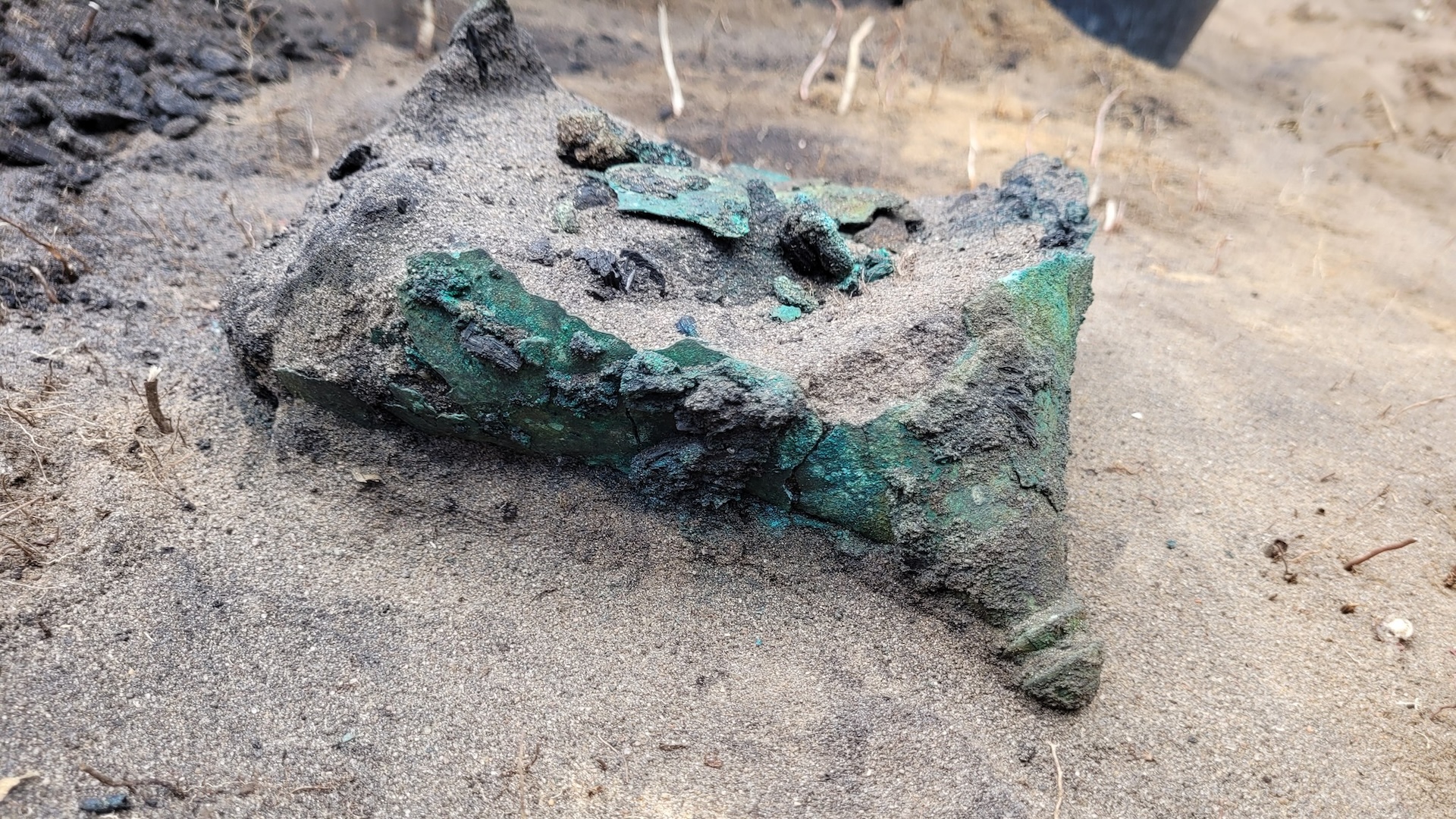
The bronze helmet is of a distinctive Celtic style known as the “Berru” (or Beru) style, with a conical point. Later examples of such helmets have only been found far to the south, like this one from Austria.(Image credit: B. Kaczyński/State Archaeological Museum)
" The helmet , along with other Celtic finds , is evidence of the presence of the Celts , " Kaczyński told Live Science , noting that it was the most northeastern site in Europe where they had been documented .
The helmet , made of thin bronze sheet - metal and in the first place lined with leather or textile , is in the Gaelic " Berru " style , with a conic top and a typical nucha , that is known from several princely burials .
" It plausibly served not only a function of emphasizing the position of its possessor , but a military one , " Kaczyński articulate . " It was an point associated with the Celtic elites . "

The bronze helmet is of a distinctive Celtic style known as the “Berru” (or Beru) style, with a conical point. Later examples of such helmets have only been found far to the south, like this one from Austria.(Image credit: B. Kaczyński/State Archaeological Museum)
bear on : fall back ' rainbow cup ' coin minted by Celts 2,000 eld ago discovered in Germany
A squad from the Archaeological Museum and the University of Warsaw unearthed the helmet in August at theŁysa Góra archaeological sitenear the Ithiel Town of Chorzele , about 65 mil ( 105 kilometers ) north of Warsaw .
Ancient artifacts
Kaczyński explain that a hill at the Łysa Góra site was in reality an ancient sand dune ; prehistoric artifacts have been found there since the nineteenth century , and the location features in local caption about veil gem .
As well as the helmet , the archaeologist have discover more than 300 ancient artifacts at the land site in the last few month . They include four iron axes and an iron sword , which are strange in this part , and which paint a picture the Celts help stick in Fe metallurgy there , he say .
The archaeologist also excavate decoration and brooches in Celtic style , and several tools used in southerly Europe but otherwise unknown in Poland at this time — including iron chisels , scythes and scissors .

One of the distinctive features of the helmet is its flared back edge, which gave protection to the nape of the neck.(Image credit: B. Kaczyński/State Archaeological Museum)
Before this , few Gaelic items had been found in northerly Poland , and it was commonly think that Celts from the Confederate States of America had only occasional contact lens with people in the due north , Kaczyński say .
But the latest find indicate that " these contact lens were not episodic , but very intense and very significant for the Gaelic community , " he said .
Precious amber
Kaczyński suggest that the Celts had settled at Łysa Góra to protect their supplies of amber — rosin from ancient trees that had solidified into orange or golden translucent glob .
— other Celtic elites inherited great power through parental air , ancient DNA uncover
— Iron Age Celtic woman wear out fancy clothes eat up in this ' tree coffin ' in Switzerland

The latest excavations at the Łysa Góra archaeological site near the town of Chorzele were carried out by a team from Poland’s National Archaeological Museum and the University of Warsaw.(Image credit: B. Kaczyński/State Archaeological Museum)
— 2,000 years ago , a bridge in Switzerland collapsed on top of Gaelic ritual killing victim , new study advise
Amber was found along the coast of the Baltic Sea in ancient time , and some of the best amber washed up from sediments in the Baltic onto the Curonian Spit , between what are now Lithuania and Russia ’s Kaliningrad oblast , or region .
Amber was highly prized in the Mediterranean world at this clock time , and gold ornaments and semi - finished gold products have also been break at the Łysa Góra internet site , Kaczyński say .

Archaeologists now think the Łysa Góra archaeological site was a Celtic trading post in the fourth century B.C., which protected supplies of amber from the Baltic Sea coast to the south.(Image credit: B. Kaczyński/State Archaeological Museum)
The discoveries suggest Łysa Góra was an important place on the " amber lead " to the Confederacy , and was probably a trading post between the flat and dry Masovia realm and the hills , lakes , and wetland of the Warmia and Masuria regions farther north , he said .
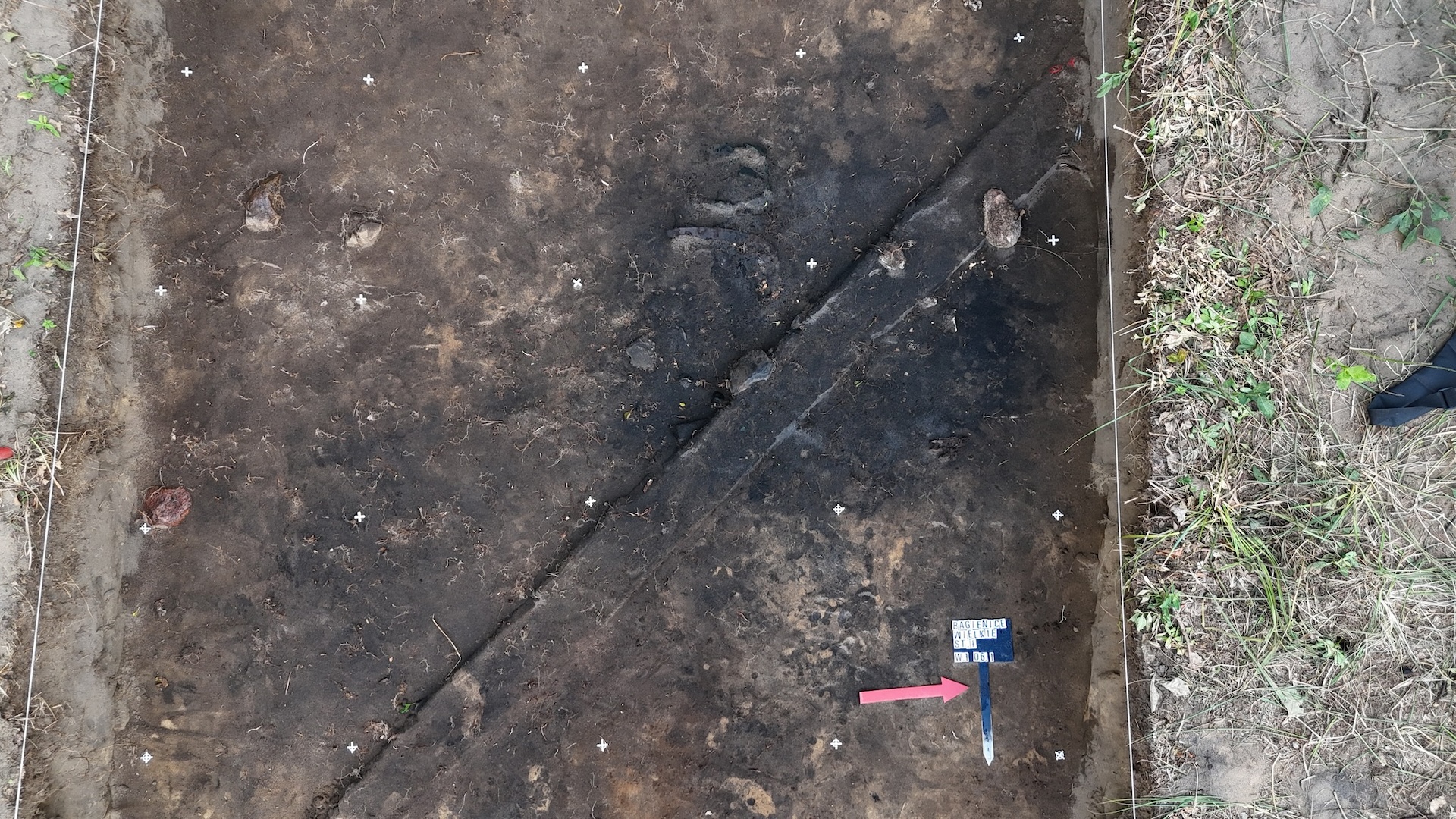
As well as the helmet, the latest excavations have unearthed more than 300 artifacts, including four iron axes, this iron sword and several farming tools, including scythes.(Image credit: B. Kaczyński/State Archaeological Museum)


